
C. difficile Toxin A and Toxin B: Roles in CDI Research, Diagnostics, Vaccines, and Therapeutics
By Stacy Burns-Guydish, PhD, and John Neville, PhD
List Labs
Clostridioides difficile infection is primarily driven by toxin-mediated damage caused by toxin A and toxin B, also known as TcdA and TcdB. These toxins are central to CDI pathogenesis and remain important tools in mechanistic research, diagnostic assay development, vaccine design, therapeutic antibody testing, and preclinical studies.
Clostridioides (Clostridium) difficile infection (CDI) continues to represent one of the most significant challenges in healthcare-associated infections (HAI) and community-acquired infectious disease, driven by rising incidence, recurrence, and disease severity worldwide.
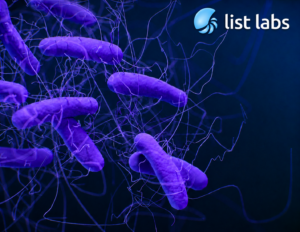
Jennifer Oosthuzen, CDC PHIL, 2019
Despite advances in antimicrobial stewardship and microbiome-based therapies, the biology of C. difficile remains central to understanding disease, developing countermeasures, and improving diagnostic strategies. As a result, toxin biology remains a focal point for ongoing research, diagnostic development, and disease prevention efforts.
Key Takeaways:
- C. difficile toxin A and toxin B are central drivers of toxin-mediated disease and remain important tools for studying pathogenesis, immune responses, and therapeutic intervention.
- Well-characterized toxin and toxoid reagents support more reproducible assay development, candidate comparison, and validation across vaccine, antitoxin, diagnostic, and basic research workflows.
- As diagnostic technologies evolve, toxin-based reagents can help researchers better evaluate assays intended to distinguish colonization from active toxin-mediated disease.
- For translational programs, reagent quality, consistency, and biological relevance become increasingly important as research moves from discovery toward preclinical and IND-enabling studies.
Why CDI Is a Toxin-Mediated Disease
How TcdA and TcdB Cause Cellular Damage
The pathogenicity of C. difficile is primarily mediated by TcdA and TcdB, both large clostridial glycosylating toxins, are encoded within the pathogenicity locus PaLoc in toxigenic strains. These toxins disrupt colonic epithelial integrity by inactivating Rho-family GTPases, leading to cytoskeletal collapse, barrier dysfunction, and cell death. TcdA and TcdB are the key drivers of epithelial injury, inflammation, barrier disruption, and CDI-associated symptoms.
Why Toxin B Is Essential for Virulence
Although historically toxin A was considered the dominant enterotoxin, extensive experimental and clinical evidence now demonstrates toxin B is essential for virulence, with strains producing toxin B alone capable of causing severe disease. This realization has reshaped diagnostic algorithms, therapeutic antibody development, and vaccine strategies.
How C. difficile Toxin A and Toxin B Are Used Across Research Applications
Mechanistic Studies of C. difficile Toxin-Mediated Pathogenesis
Purified C. difficile toxins are important tools for studying how TcdA and TcdB contribute to disease at the cellular and tissue level. In mechanistic studies, researchers commonly use purified toxins to evaluate epithelial cell injury, cytoskeletal disruption, cell rounding, loss of barrier integrity, inflammatory signaling, immune-cell activation, and cell death pathways. These studies help clarify how toxin exposure translates into tissue damage, inflammation, and clinical symptoms associated with CDI.
Cell-Based Assays
Cell-based assays remain one of the most widely used approaches. In these systems, purified TcdA or TcdB can be applied to epithelial or immune-cell models to measure cytopathic effects, changes in cell morphology, inflammatory mediator release, and disruption of host-cell signaling pathways. Barrier function models, including polarized epithelial monolayers, are also used to study how toxin exposure affects tight junction integrity and intestinal permeability.
Advanced Research Models
More advanced model systems have expanded the relevance of these studies. Intestinal organoids, ex vivo tissue models, and animal models allow researchers to examine toxin activity in systems that more closely reflect the complexity of the intestinal environment. These approaches can help bridge the gap between simplified cell culture experiments and in vivo disease biology, supporting a deeper understanding of toxin-driven pathogenesis.
Importance of Reagent Consistency
Across these applications, reagent consistency is essential. Well-characterized toxin preparations support reproducible experimental design, meaningful comparison between platforms, and greater confidence when translating mechanistic findings into therapeutic, vaccine, or diagnostic development.
Use of TcdA and TcdB in Vaccine and Therapeutic Development
Because CDI is largely toxin-mediated, many vaccine and therapeutic strategies focus on neutralizing TcdA and TcdB. Purified toxins, toxoids, recombinant toxin fragments, and receptor-binding domains are used to evaluate:
- antibody binding,
- functional neutralization,
- immunogenicity, and
- protection in preclinical models.
In vaccine development, toxin-based ELISAs and cell-based neutralization assays help determine whether candidate immune responses can block toxin activity, not just recognize the antigen. In therapeutic programs, purified TcdA and TcdB are used to assess the potency, specificity, and functional inhibition of monoclonal antibodies, antitoxin biologics, and other neutralizing approaches.
Across these workflows, well-characterized toxin reagents support reproducible assays, meaningful candidate comparison, and more consistent progression from discovery research into preclinical and IND-enabling studies. In these applications, purified C. difficile toxin A, toxin B, and related toxoid reagents serve as important tools for evaluating vaccine, antitoxin, neutralization, and assay-development strategies.
C. difficile Toxin A and B in Diagnostics and Assay Development
Why Toxins Matter in CDI Diagnosis
Accurate CDI diagnosis requires more than detecting the presence of C. difficile; it often depends on determining whether toxigenic strains are producing biologically active toxins. For this reason, TcdA and TcdB remain important targets in diagnostic development and assay validation.
Use of Purified Toxins in Assay Development
Purified toxins are used as calibrants, positive controls, and assay-development tools in enzyme immunoassays, cell-based cytotoxicity assays, and emerging biosensor platforms. These reagents help developers evaluate assay sensitivity, specificity, dynamic range, and reproducibility when measuring toxin activity or concentration.
Supporting Next Generation Diagnostic Platforms
As diagnostic technologies continue to evolve, well-characterized toxin reagents support the development of assays that can better distinguish colonization from active toxin-mediated disease. For researchers developing or validating CDI assays, purified C. difficile toxin A and toxin B can serve as important reference materials for measuring toxin activity, assay performance, and reproducibility.
Broader Context: CDI, Recurrence, and Innovation
Approximately one in four CDI patients experience recurrence, driven in part by toxin-mediated immune evasion and impaired development of protective anti-toxin responses. This has renewed interest in toxin-focused strategies—from neutralizing antibodies and vaccines to biosensors capable of distinguishing colonization from active disease.
Advances in microbiome therapeutics, antimicrobial agents, and infection prevention will continue, but toxin biology remains the mechanistic foundation upon which most CDI innovations are built.
Conclusion: Investing in the Right Reagents Accelerates Progress
As the understanding of Clostridioides difficile continues to evolve, toxin A and toxin B remain central to CDI research, diagnostic development, vaccine design, and therapeutic innovation. These toxins are not only key mediators of disease pathology, but also essential tools for studying how CDI develops, how host tissues respond, and how new interventions may prevent or reduce toxin-mediated damage.
Reliable, well-characterized toxin and toxoid reagents help researchers generate reproducible data across a wide range of applications, from mechanistic cell-based studies to neutralization assays, diagnostic development, and preclinical vaccine evaluation. Consistent reagent performance, clear documentation, and lot-specific characterization are especially important as programs move from exploratory research toward more translational and regulated workflows.
List Labs supports this work by providing purified C. difficile toxin A, toxin B, toxoids, antibodies, and related bacterial products backed by clear documentation, reproducible performance, and long-standing expertise in bacterial toxin biology. By supplying reagents used across CDI research, assay development, diagnostics, and preclinical therapeutic studies, List Labs helps researchers advance the study of toxin-mediated disease and the development of future prevention, detection, and treatment strategies. To learn more, explore our citations page to see how researchers have used List Labs toxin products in published studies.
Frequently Asked Questions
What is C. difficile Toxin A and Toxin B?
C. difficile toxin A and toxin B, also known as TcdA and TcdB, are major exotoxins produced by toxigenic strains of C. difficile. They contribute to epithelial damage, inflammation, barrier disruption, and symptoms associated with CDI.
Why are purified C. difficile toxins used in research?
Purified toxins allow researchers to study toxin-mediated cellular injury, immune activation, cytopathic effects, neutralization, diagnostic assay performance, and vaccine or therapeutic candidate activity under controlled conditions.
How are TcdA and TcdB used in vaccine development?
TcdA and TcdB are used in immunogenicity studies, ELISAs, neutralization assays, antigen validation, and preclinical models to evaluate whether candidate vaccines or antibodies can block toxin activity.
How are C. difficile toxins used in diagnostic assay development?
Purified toxins can serve as calibrants, positive controls, or assay-development tools for EIAs, cytotoxicity assays, and biosensor platforms that measure toxin presence, concentration, or biological activity.







 Find a distributor near you
Leave a Reply